|



 |
|
|
Materials of this chapter were also published in: Ryabchinskaya, T.A., Kharchenko.G.L., Sarantseva, N.A.(2005) New phytoactivator of resistance to diseases. Plant Protection and quarantine. Nr.4, p. 26-27.
Influence of Albit on black currant was examined in trials carried out by All-Russia Institute of Plant Protection and All-Russia Institute of Vegetable Selection and Seed Breeding (2001-2003) in Voronezh and Moscow oblasts on currant varieties Belorusskaya sladkaya, Minay Shmyrev and Golubka. Averagely, according to results of the trials, treatment with Albit increased yield of black currant by 10.8 centners/hectare (34.6% over control). Analysis of yield-forming elements revealed, that Albit stimulates setting of berries and their further growth. The biostimulant increased number of flowers by 9-10% and increased setting of berries by 9-13% over control. After double or triple application of Albit, leaf assimilation surface was increased 1.2-1.3 fold, chlorophyll content - by 6-12%, annual increment of shoot growth - by 10-30% over control. Versatile activity of Albit (fungicidal effect against American gooseberry mildew, immunity and growth stimulating effects) provides harvesting of good resulting yield. Albit demonstrated high Biological efficiency (BE) against American gooseberry mildew (caused by Sphaerotheca mors-uvae Berk. et Curt.); the average BE is 71.2%, the minimal one is 58%. Fungicidal activity of Albit was observed at disease prevalence of 2-8% and disease development of 2-49%. Albit is officially registered in Russia as fungicide against this disease. Albit also improves yield quality of black currant: increases content of vitamin C in berries by 5.8-13.8 relative %. Also, treatments with Albit increase size of berries (by 10-20%) and provide more simultaneous ripening. In conducted trials, economical or biological effectiveness of Albit was not inferior to that of formulations based on Pseudomonas fluorescens, Pseudomonas aureofasciens and arachidonic acid. Application recommendations. It is recommended to perform double or triple foliar spraying of currant plants starting from budbreak/budding stage with 25-30 days interval. Application rates are 50 ml of Albit or 500-600 liters of working solution per hectare. On small plots (when calculation per hectare is quite difficult) plants can be watered with Albit solution, 1 ml/10 L of water providing full moistening of leaves. Albit suppress development of American gooseberry mildew for 1 month, therefore interval between treatments must be 25-30 days. Application of Albit is most effective in budbreak/budding stage; it provides more versatile multifunctional activity of the biostimulant, especially induction of natural immunity of plants. In case of epiphytoty, the additional (third) treatment is necessary. According to conclusion of All-Russia Institute of Plant Protection, inclusion of Albit into system of black currant protection is quite promising for decreasing injuriousness of main phytopathogenic objects and increasing productivity. Application of Albit helps to decrease consumption of chemical fungicides or to reject them completely, that is especially important for production of child’s and dietary feeding, and provides considerable economical effectiveness – up to 7500 roubles/hectare. Average profitability of Albit application is 2300%.
|
|
||||||||||||||||||||||||||||||


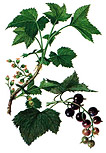 Black currant (Ribes nigrum L, order Saxifragaceae) is one of the
most important berry cultures in Russia. Berries of black currant are valuable food
substance, reach in vitamins (especially vitamin C), pectins and minerals. Due to
labour-intensiveness of organizations of new plantations, it is especially important
to increase productiveness of already available ones. Application of biostimulants
helps to get additional organic production.
Black currant (Ribes nigrum L, order Saxifragaceae) is one of the
most important berry cultures in Russia. Berries of black currant are valuable food
substance, reach in vitamins (especially vitamin C), pectins and minerals. Due to
labour-intensiveness of organizations of new plantations, it is especially important
to increase productiveness of already available ones. Application of biostimulants
helps to get additional organic production.

 |
Terms and Conditions
|
|