 |
An innovative plant growth promoter for organic and traditional farming
|
 
|
Winter wheat |
|


Materials of this chapter are also published in: Zlotnikov A.K, Derov A.I., Begunov I.I., Zlotnikov K.M. (2005) Application of Albit on winter wheat. Zemledelie. Nr. 3. p. 31-32.
 Influence
of Albit on winter wheat was examined in more than 35 field trials in many
regions of Russia (Voronezh, Bryansk, Oryol, Rostov and others). By now, Albit
is used in all main wheat-growing regions of Russia (European part of the country,
North Caucasus, Povolzhye). Trials were performed since 1998 year on the following
varieties of wheat: Tarasovskaya-29, Mironovskaya-808, Pobeda-50, Batko,
Deya, Kroshka, Lira, Rufa, Moskovskaya-39, Skifyanka, Donskaya bezostaya, Don-95,
Prikumskaya-110, Prikumskaya-140, Prikumchanka, Prikumskaya-124, Inna, Umanka,
Vita, Ofeliya and others in All-Russia Institute
of Leguminous and Groat Crops, All-Russia Institute of Plant Protection, All-Russia
Institute of Plant Protection RAAS, All-Russia Institute of Biological Plant
Protection, Soil Institute, Lipetsk State Sort Testing Station, Central Institute
of Agrochemical Service, Kursk Institute of Agroindustrial Manufacturing, Krasnodar,
Kursk, Lipetsk, Saratov Regional Plant Protection Stations, Prikumsk Agricultural
Experimental Station, Closed Agricultural Corporation Rus, Rodina collective
farm, Bryzgalin i Uvarov’s farm, Zolotaya Niva agrofirma, Praskoveya agricultural
cooperative farm, OSC Chapaev breeding farm, Kubanagro-Fasta LLC, Yug Agrobisnes
OSC, Kushchevskoe agricultural cooperative farm, Niva Closed Agricultural Corporation,
Zaria agricultural farm, and in other farms of Zernograd and Peschankopsk rayons
of Rostov oblast, Grachevskiy Agricultural cooperative farm of Lipetsk oblast
and others.
Influence
of Albit on winter wheat was examined in more than 35 field trials in many
regions of Russia (Voronezh, Bryansk, Oryol, Rostov and others). By now, Albit
is used in all main wheat-growing regions of Russia (European part of the country,
North Caucasus, Povolzhye). Trials were performed since 1998 year on the following
varieties of wheat: Tarasovskaya-29, Mironovskaya-808, Pobeda-50, Batko,
Deya, Kroshka, Lira, Rufa, Moskovskaya-39, Skifyanka, Donskaya bezostaya, Don-95,
Prikumskaya-110, Prikumskaya-140, Prikumchanka, Prikumskaya-124, Inna, Umanka,
Vita, Ofeliya and others in All-Russia Institute
of Leguminous and Groat Crops, All-Russia Institute of Plant Protection, All-Russia
Institute of Plant Protection RAAS, All-Russia Institute of Biological Plant
Protection, Soil Institute, Lipetsk State Sort Testing Station, Central Institute
of Agrochemical Service, Kursk Institute of Agroindustrial Manufacturing, Krasnodar,
Kursk, Lipetsk, Saratov Regional Plant Protection Stations, Prikumsk Agricultural
Experimental Station, Closed Agricultural Corporation Rus, Rodina collective
farm, Bryzgalin i Uvarov’s farm, Zolotaya Niva agrofirma, Praskoveya agricultural
cooperative farm, OSC Chapaev breeding farm, Kubanagro-Fasta LLC, Yug Agrobisnes
OSC, Kushchevskoe agricultural cooperative farm, Niva Closed Agricultural Corporation,
Zaria agricultural farm, and in other farms of Zernograd and Peschankopsk rayons
of Rostov oblast, Grachevskiy Agricultural cooperative farm of Lipetsk oblast
and others.
Depending on hydro-meteorological conditions of the year, the way of treatment and region of growing, yield increase of winter wheat due to Albit was 1.0-12.5 centners/hectare. Averagely, according to results of all performed trials, treatment with Albit increased yield of winter wheat by 0.5 t/ha (13.2%). In Voronezh oblast Albit increased yield of winter wheat averagely by 0.39 t/ha, by 0.61 t/ha in Krasnodar krai, 0.68 t/ha in Kursk and Lipetsk oblasts, by 0.73 t/ha in Oryol oblast, by 0.4 t/ha in Ryazan oblast, by 0.33 t/ha in Saratov oblast, by 0.39 t/ha in Stavropol krai (Figs. 1, 4). After Albit application in Rumania of 2018, a record yield increase of winter wheat 1.82 t/hа (28%) was obtained in stress conditions of vegetative season (Fig. 5).
 |
 |
Fig. 1. Ears of winter wheat grown with Albit application (top – Plovdiv Province, Bulgaria, 2018, var. Mojson; bottom – Stavropol kraj, 2005)
Application recommendations. Recommended full treatment of winter wheat with Albit includes presowing treatment and at least one (better – two) foliar spraying. Presowing treatment creates approximately 50–60% of the total effect; the rest (40–50%) can be reached with foliar sprayings. Recommended application rates of Albit are: 40–100 mL/t, 30–40 mL/ha. The higher rate of Albit (100 mL/t for seed treatment or 40 mL/ha for foliar spraying) is used for control of phytotoxic effect of protectants and prolonged immunization of plants during vegetation season.

Fig. 2. Applying of Albit for seed treatment contributed
to enhanced development of root system of winter wheat (Kustodija, Litva, 2011)
For pre-sowing seed treatment, we recommend to apply Albit together with halved or full rates of chemical fungicides that considerable reduces the treatment cost while retaining the protective effect.
The field trials showed that pre-sowing Albit treatment can successfully increase the yield of winter wheat by 6-30% compared to control. Seed treatment allows to increase the field germination (2.2–9.3% increase, according to VIZR, VNIIBZR data), promotes development of a strong root system (increasing the length and weight of roots) (Fig. 2), and supports tillering. Seed treatment with Albit also effectively protects plants from root rots. For example, the biological effectiveness of this treatment against helminthosporium and other root rots is 37.5-47.4% (VIZR data, Volgograd region, 2004-2005), 66.7% (VIZR, Krasnodar Territory, 2004-2005), 68% (VNIBZR, Krasnodar Territory, 2003-2004). Seed treatment with Albit has a positive effect on the overwintering ability of winter wheat. Lithuanian Institute of Agriculture (2013-2014) researched the effect of seed treatment with the combination of Albit and fungicide (full and reduced application rates) and showed that the treatments enhanced overwintering ability of winter wheat crops (Fig. 3).

Fig. 3. Winter wheat overwintering ability in response
to seed treatment with fungicide and Albit (Lithuanian Institute
of Agriculture, 2013-2014)
Seed treatment can be used as an independent agricultural method; however, it is better to consolidate and enhance its effect by subsequent spraying of vegetative plants.
Foliar treatments with Albit effectively prevent leaf infections (brown rust, powdery mildew, Septoria leaf spot), increase productive tillering and flag leaf growth, accelerate alternation of development stages, increase plant resistance to drought and heat, promote formation of additional seeds in ear, increase gluten content in grain. We recommend to combine Albit treatments with scheduled application of herbicides, insecticides and liquid fertilizers.
The first foliar treatment (BBCH 20–40) is the most effective one. Usually it is combined with application of herbicides after winter hibernation of plants (Fig. 4). Plants weakened by hibernation, root rots and herbicidal stress respond to Albit treatment with dramatic yield increase, which might reach 10 tonne/hectare under field conditions. The highest effectiveness of such treatment was obtained in farms of Rostov oblast and Krasnodar krai. For example, one of largest and prosperous agricultural companies of Southern Russia (‘Yug-Agrobiznes’) tested the effect of early spring treatment of wheat with a combination of Albit and herbicides (a.i. mefenpyr-diethyl, amidosulfuron, iodosulfuron-methyl, dicamba and triasulfuron) during a large-scale field experiment covering 19000 hectares (2004). The average yield from treated fields was 6.76 tonne/hectare, whereas neighbouring farms (which did not use Albit) harvested averagely 5.51 tonne/hectare. Aside from yield increase, Albit treatments can save crops from damage by spring frosts and promote their swift recovery. This effect was proven by research in the Republic of Kalmykia and the Rostov region in the spring of 2012. Albit acted as an effective solution for revival of crops after spring frosts, subsequently adding to a significant increase in yield: 0.3 tonne/ha (+25%).
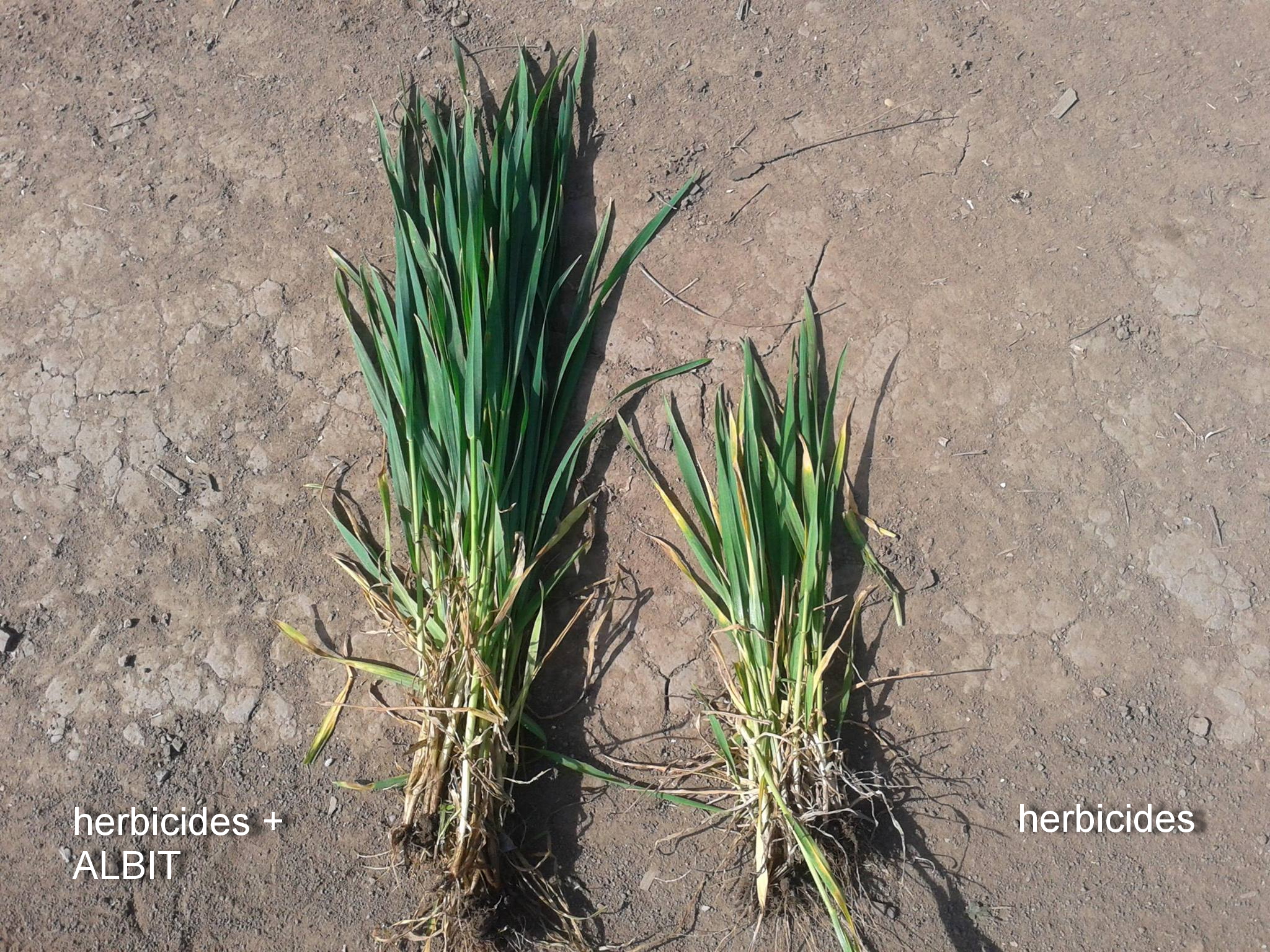
Fig. 4. Albit reduces herbicide stress of winter
wheat. Plants were treated with herbicide (right) and tank mix of herbicide +
Albit (left) (farm Marius Olteanu, Constanta, Romania, 2016)
Application of herbicides causes pronounced stress on wheat that makes it more sensitive to leaf infections, that in turn requires additional fungicidal treatments. Application of Albit as an active immunizer makes possible avoiding application of expensive fungicides (Fig. 5). In case of high infectious environment when application of fungicide is still necessary, it is possible to use Albit with halved dose of the pesticide that anyway leads to considerable reduction of expenses.
 |
 |
Fig. 5. Field of winter wheat var. Krasnodarskaya 99 grown with adding of Albit (40 mL/t + 40 mL/hа + 40 mL/hа) to standard chemical treatments. Yield increase to chemical standard was 0.77 t/hа (Aleksandrovskij region, Stavropol kraj, 2005)
Albit is the only biostimulant officially registered in Russia as a drought resistance promoter of field crops (List of pesticides allowed to use in Russia, 2006). Foliar spraying with Albit increases drought resistance by 10-60%; increased drought resistance remains for several months after treatment (Fig. 6). In dry 2003, farmers of Krasnodar krai due to using of Albit managed to get the same yield as in normal 2002 (50-70 centners/hectare).

Fig. 6. Winter wheat spikes grown with using of standard protection system and in variant with adding of Albit. A record yield increase of winter wheat (28%) was obtained in stress conditions of vegetative season – heat and drought and then heat and torrential rains (Agricultural Experimental Station SCDA Lovrin, Rumania, 2018)
Also, Albit is a strong plant growth promoter. Acceleration of phenological phases change and maturation due to Albit might reash 4-8 days.
The second foliar treatment (BBCH 50–70) increases effectiveness of the first one by 20–30% and can be used as an additional agricultural technique, but it should follow earlier treatments. The second foliar treatment may be also conducted at the booting stage – stage of flag leaf (in this case, decrease of gluten content may occur despite of yield increase). For winter crops, both sprayings should better be conducted in spring. It increases number of seeds in ear, length of ear, weight and appearance of grain, gluten content and gluten tensility, decreases ear emptiness. The second foliar spraying (usually combined with urea and insecticides) is used for yield quality improvement mainly. Albit increases gluten content by 1,6 abs. % averagely (2,3% to control) (Table 1). It is necessary to note, that preceding treatments (presowing and first foliar) are also considerably increase this characteristic.
Table 1. Influence of Albit application on gluten content in winter wheat (selected data)
Variety of winter wheat |
Gluten content in control, % |
Increment of gluten content, abs. % |
Field trial, location, year |
Kolompos |
32,7 |
2,3 |
Agricultural Research Institute, Martonvasar, Hungary, 2013-2014 |
Bat'ko |
22,0 |
2,6 |
All-Russia Institute of Biological Plant Protection, Krasnodar kraj, 2006-2007 |
Bat'ko |
34,0 |
2,6 |
All-Russia Institute of Biological Plant Protection, Krasnodar kraj, 2010-2011 |
Bat'ko |
34,0 |
2,6 |
All-Russia Institute of Biological Plant Protection, Krasnodar kraj, 2011-2012 |
Bat'ko |
20,8 |
2,3 |
ZAO АF "Agrokompleks", Krasnodar kraj, 2007-2008 |
Bat'ko |
17,1 |
5,3 |
ZAO АF "Niva", Krasnodar kraj, 2003-2004 |
Bezenchukskaya 380 |
25,0 |
2,2 |
ZAO "Zemlyanskoe", Voronezh oblast, 2006-2009 |
Dar Zernograda |
28,8 |
2,2 |
Stavropol' Research Institute of Agriculture, 2007 |
Kaly'm |
26,5 |
1,2–4,5 |
All-Russia Institute of Biological Plant Protection, Krasnodar kraj, 2012-2013 |
Moskvich |
24,8 |
2,0 |
ОАО "Avtoban-Аgro", Krasnodar kraj, 2010 |
Moskovskaya 39 |
25,6 |
4,8 |
V. V. Dokuchaev Soil Science Institute, Kursk oblast, 2002 |
Odesskaya 267 |
25,5 |
2,5 |
Scientific Institute of Agriculture, Belgorod, 2006 |
Pamyat' |
17,1 |
2,1 |
СPK "Nasha Rodina", Krasnodar kraj, 2006-2007 |
Prikumskaya 152 |
21,0–22,5 |
1,0–3,4 |
Prikumskaya ОSS, Stavropol' kraj, 2004-2005 |
Umanka |
19,2 |
3,4 |
СPK "Praskoveya", Stavropol' kraj, 2004 |
Application rate of working solution: 200–300 L/ha (ground sprayers) and 50–100 L/ha (aviation sprayers). In this period winter wheat is being treated with insecticides against shield-backed bugs and other pests. As is known, insecticide treatments retards seed ripening and decreases gluten content in the future yield. Joint using of Albit and insecticides abolishes this effect: Albit increases gluten accumulation by 1.2-4.6% over control (variant with insecticide only).
The usual application rates of urea used under field conditions is up to 30 kg/hectare, or 10% solution approximately (up to 30% at air spray), whereas concentration of even 1% inflicts burns and is considered to be toxic for plant growth. Albit added to urea solution is able to completely relieve this toxic influence of urea on plants.
Combination of Albit with humates (especially with lignohumate) is also quite promising. At farms of Krasnodar krai in 2004 Albit increased gluten content by 2.9%, whereas its combination with lignohumate increased gluten content by 5.3%.
The highest effectiveness of Albit treatment can be reached with two foliar sprayings. Foliar sprayings might be used as a separate and quite efficient agricultural technique, however, the full potential of Albit can be realized by the use of combination of presowing treatment and two foliar sprayings.
Short-interval (1 day) double application of Albit on winter wheat is also quite interesting technique. Grachevskiy agricultural cooperative farm of Lipetsk oblast in 2004 used this method: first of coupled applications of Albit was combined with herbicide, the second (Albit alone) followed on the next day. In result, yield increase at single treatment was 4.5 centners/hectare, whereas double application provided extra 10 centners/hectare. On winter wheat Albit is applied as antidote for reducing of phytotoxic effect of pesticides. Also Albit increases germination, activates growth and development, increases drought resistance and resistance to other unfavorable climate conditions, increases yield, improves yield quality (increase of gluten content). Our product is effective against root rots, Septoria leaf spots, brown rust, powdery mildew and also Albit increases resistance to other diseases.
Albit is officially registered in Russia as a fungicide against following diseases of winter wheat: root rots (Fusarium spp., Bipolaris sorokiniana (Sacc.) Shoemaker), brown rust (Puccinia recondita Roberge: Desm. f. sp. tritici (Erikss.) C.O. Johnston), Septoria leaf spot (Septoria spp.) and powdery mildew (Blumeria (Erysiphe) graminis (DC)). Though Albit does not have eradicating activity, it can improve plant immunity and suppress disease development at beforehand application. According to performed tests it was found that the average Biological Effectiveness (BE) of Albit against root rots is 81.0%, against Septoria leaf spot - 52.1%, against powdery mildew – 51.0%, against brown rust – 49.1%, against loose smut – 39.4%. The maximal biological effectiveness of the bioformulation was 83-100%; Albit is the most helpful against root rots (BE 67-100%, averagely 81%). Albit demonstrated its fungicidal activity in wide range of infection levels: at disease prevalence (P) from 4 to 100%, and disease development (R) from 2 to 34%. However, at high infectious environment (infestation with complex of pathogens over 50%, 10% level of is internal infections), activity of the bioformulation gets considerably lower. In such cases, Albit is recommended to be used with halved or full doses of chemical fungicides. In case of air infections, Albit should be used before appearance of the first signs of disease to immunize plants properly.
As it was shown in multiple trials, application of Albit with halved doses of chemical fungicides for presowing seed treatment and foliar sprayings results in the same protective effect as full doses of fungicides and considerably reduces treatment expenses (see details here.
For example, specialists of All-Russia Institute of Biological Plant Protection studied the effectiveness of Albit foliar sprayings against air infections of winter wheat. Experiment was performed under conditions of naturally high infectious environment (nearly epiphytotic). Observations on disease development at 21st day demonstrated that in control set (without treatment) infestation of flag and sub-flag leafs with brown rust (Puccinia recondita) and Septoria leaf spot (Septoria tritici, Pyrenophora tritici-repentis) was 58% and 26% respectively. Biological effectiveness of Albit against rusts was 52%, against septorioses – 26%. BE of halved doses of most commonly used fungicides based on a.i. propiconazole, cyproconazole, epoxiconazole, spiroxamine and tebuconazole was also not very high – 58-60% against rusts, 49% against septorioses. However, BE of mixtures of Albit and halved doses of these pesticides was 86-89% against rusts and 78-80% against septorioses, that is comparable with BE of full doses of pesticides (76-90%).
The effectiveness of the bioformulation is variety-dependent. So, in trials of Prikumsk Agricultural Experimental Station, application of Albit was most efficient on wheat varieties Prikumchanka and Prikumskaya 124 (both are hard wheat varieties) and less efficient – on wheat variety Pobeda 50. Soil and climatic conditions also influence on Albit effectiveness. For example, average yield increase in relatively dry regions (Saratov oblast, Stavropol krai) was 3-4 centners/hectare, whereas in more humid ones (Krasnodar krai, Kursk and Oryol oblasats) – 6-7 centners/hectare. The next factor influencing on Albit effectiveness is the predecessor. In Rostov oblast (2001-2002), yield increase due to Albit presowing treatment was 11 centners/hectare after fallow and just 4-6 centners/hectare when there was no fallow year.
Treatments of winter wheat with Albit are economically efficient. Full complex treatment of 1 hectare field with Albit (presowing seed treatment and two foliar sprayings) takes approximately 80 ml of the formulation. Each litre of Albit can be used for treatment of 12.7 hectares of wheat.
Each rouble invested to such treatment brings back 4-15 roubles of profit. Practically, the profit might be even higher (1 invested rouble might bring up to 50 roubles of profit), as far as even partial treatment (for example, just presowing seed treatment + one foliar spraying) is quite efficient. Each litre of Albit provides an average additional yield of 56 centners of winter wheat.
In field trials, effect of Albit was not inferior to that of plant growth regulators and fungicides based on propiconazole, humates, silicon compounds, spiroxamine, tebuconazole, triadimenol, orthocresoxiacetates, cyproconazole, derivates of arachidonic acid, epibrassinolide, Pseudomonas aureofaciens and its metabolites, and others. Supremacy of Albit was demonstrated in number of comparative experiments. Though fungicidal activity of Albit is generally lower than that of the best chemical fungicides, but due to integrated plant growth stimulating activity, protective effectiveness and low cost, Albit excels chemical analogues in terms of economical efficiency. For example, in trial of All-Russia Institute of Plant Protection (2002), each rouble invested to Albit treatment brought 52 roubles of profit, whereas application of chemical analogues based on thiram and tebuconazole brought just 1.5 roubles, though their fungicidal activity was higher.
In the following Table, you can see all reports on performance of Albit on winter wheat, available in English. For all available reports, please see corresponding table on Russian webpage.
№ |
Year |
Country |
Region |
Institute / Farm |
Report |
| 1 | 2015-2016 |
Romania |
Neamt |
Agricultural Research and Development Station (S.C.D.A.) / Secuieni |
 |
| 2 | 2014-2015 |
Latvia |
|
Aizaploki Farm of Agric. Cooperative AGRARIO |
|
| 3 | 2014-2015 |
Romania |
jud. Valcea |
Locatia Babeni |
|
| 4 | 2013-2014 |
Czech Republic |
Prague |
Research Institute of Plant Cultivation |
|
| 5 | 2013-2014 |
Hungary |
|
Agricultural Research Institute of the Hungarian Academy of Sciences / Experimental Station of the Institute at Martonvasar |
|
| 6 | 2013-2014 |
Lithuania |
Vilnius |
Lithuanian Institute of Agriculture |
|
| 7 | 2013-2014 |
Russia |
Krasnodar krai |
National Scientific Research Institute of Biological Plant Protection, Russian Academy of Agricultural Sciences |
|
| 8 | 2012-2013 |
Russia |
Krasnodar krai |
National Scientific Research Institute of Biological Plant Protection, Russian Academy of Agricultural Sciences |
|
| 9 | 2012-2013 |
Slovakia |
Nitra |
Slovak University of Agriculture in Nitra |
|
| 10 | 2011-2012 |
China |
Hebei province |
Soil and Fertilizer Station of Hebei Province / Donganfeng village, Xipingle township, Zhengding district, Shijiazhuang city |
|
| 11 | 2011-2012 |
China |
Hebei province |
Soil and Fertilizer Station of Hebei Province / Zhangdian village, Mashen township, Yaocheng district, Hengshui |
|
| 12 | 2011-2012 |
Czech Republic |
Central Bohemian region |
Czech University of Life Sciences Prague / Research Station of CULS |
|
| 13 | 2011-2012 |
Czech Republic |
Olomouc region |
Ditana spol s.r.o. |
|
| 14 | 2011-2012 |
Czech Republic |
Zlin region |
Agricultural Research Institute Kromeriz |
|
| 15 | 2011-2012 |
Switzerland |
|
Jonathan Leuenberger Farm |
|
| 16 | 2011-2012 |
Switzerland |
Oullens |
Vuillamy Alain Farm |
|
| 17 | 2011-2012 |
France |
|
Berlrand Gumy Farm |
|
| 18 | 2011 |
China |
Hebei province |
Xuguanying, Yongnian county |
|
| 19 | 2010-2011 |
Latvia |
Stende |
DPP State Stende Cereals Breeding Institute / Seed farming crop rotation |
|
| 20 | 2010-2011 |
Sweden |
Malmohus |
Experimental farm ‘Borgeby Gard’ |
|
| NOTICE: | Information contained on this page is provided according
to the Terms and Conditions located at
www.albit.com/application/disclaimer.php
|