 |
An innovative plant growth promoter for organic and traditional farming
|
 
|
Spring barley |
|


Materials used in this chapter were published in the book Biostimulant Albit for increasing yields and protection of agricultures against diseases, A.K. Zlotnikov, Ed. Prof. А. Melkumova. All-Russia Institute of Plant Protection, Russia, 2006.
 Influence
of Albit on spring barley was examined in more than 60 field trials in many
regions of Russia (Krasnodar and Primorye krais, Bryansk, Vladimir, Voronezh,
Kirov, Kostroma, Kurgan and other oblasts). Field trials were performed since
1997 year on the following barley varieties: Zazerskiy-85, Odesskiy-100,
Vizit, Primorskiy 89, Preriya, Odesskiy-115, Suzdalets, Donetskiy-4, Nutans-642,
Donetskiy-8, Zaozerskiy-85, Bios-1, Omskiy-90, Krinichnyy, Rubikon,
Abava and others by All-Russia Institute of Leguminous and
Groat Crops, All-Russia Institute of Plant Protection, Far East Institute of
Plant Protection, Soil Institute, Kurgan Institute of Grain Growing, Central
Institute of Agrochemical Service, Lipetsk State Sort Testing Station, Ryazan
State Agricultural Academy, Vladimir, Voronezh, Kirov, Kurgan, Kursk, Lipetsk,
Penza, Primorye, Saratov, Tula, Yaroslavl Regional Plant Protection Stations,
Karachaevo Plant Protection Station of Bryansk oblast, Chapaev cattle farm
OSC, and Kushchevskoe agricultural cooperative farm of Krasnodar krai and others.
Influence
of Albit on spring barley was examined in more than 60 field trials in many
regions of Russia (Krasnodar and Primorye krais, Bryansk, Vladimir, Voronezh,
Kirov, Kostroma, Kurgan and other oblasts). Field trials were performed since
1997 year on the following barley varieties: Zazerskiy-85, Odesskiy-100,
Vizit, Primorskiy 89, Preriya, Odesskiy-115, Suzdalets, Donetskiy-4, Nutans-642,
Donetskiy-8, Zaozerskiy-85, Bios-1, Omskiy-90, Krinichnyy, Rubikon,
Abava and others by All-Russia Institute of Leguminous and
Groat Crops, All-Russia Institute of Plant Protection, Far East Institute of
Plant Protection, Soil Institute, Kurgan Institute of Grain Growing, Central
Institute of Agrochemical Service, Lipetsk State Sort Testing Station, Ryazan
State Agricultural Academy, Vladimir, Voronezh, Kirov, Kurgan, Kursk, Lipetsk,
Penza, Primorye, Saratov, Tula, Yaroslavl Regional Plant Protection Stations,
Karachaevo Plant Protection Station of Bryansk oblast, Chapaev cattle farm
OSC, and Kushchevskoe agricultural cooperative farm of Krasnodar krai and others.
According to results of the trials, treatment with Albit increased yield of spring barley averagely by 3.7 centners/hectare (19.6%). In Voronezh oblast Albit increased yield of spring barley averagely by 1.9 centners/hectare, in Krasnodar krai by 9.4, in Kurgan oblast by 4.2, in Kursk oblast by 5.2, in Lipetsk oblast by 5.1, in Oryol oblast by 3.3, in Penza oblast by 3.4, in Primorye krai by 4.3, in Ryazan oblast by 3.9, in Saratov oblast by 3.1, in Tula oblast by 5.8, in Yaroslavl oblast by 1.9. Each litre of Albit provides additionally 43 centners of spring barley on average.
Albit demonstrated high Biological Efficiency (BE) against the following diseases of barley: averagely 89.9% against powdery mildew, 69.7% against root rots, 60.4% against net blotch (helminthosporiose), 68.6% against stem rust, 65.2% against spot blotch, 52.7% against smut diseases, 50.0% against brown rust, 45.0% against Septoria leaf spot. Fungicidal activity of Albit is detected at the disease prevalence (P) level of 1–90% and disease development (R) of 2–39%. Albit is officially registered in Russia as a fungicide against root rots, against net and spot blotches of barley.
On spring barley Albit is applied as antidote for reducing of phytotoxic effect of pesticides. Also Albit increases germination, activates growth and development, increases drought resistance and resistance to other unfavorable climate conditions, increases yield, improves yield quality, increases resistance to diseases, promotes to decreasing of stress after herbicide treatment.
Besides yield increase and disease control, Albit increases germination ability, accelerates germination and changes of phenological stages, increases stem length, stem density, total and productive tillering, ear length, number of seeds in ear and weight of seeds, decreases ear emptiness.
Recommended application rates of Albit are: 30–40 mL/t, 30–40 mL/ha. The higher rate of Albit (40 mL/ha for foliar spraying) is used for prolonged immunization of plants. Generally, presowing seed treatment with Albit is carried out in combination with halved dose of chemical protectant. Albit effectively relieves stress influence of chemical protectant, that considerably increases protectant’s efficiency and yield increase (Fig. 1). Also, such treatment considerably (up to 12 days) accelerates change of phenological stages and ripeness (Figs. 2, 3).
To obtain maximum efficiency of Albit, it is recommended to supplement presowing seed treatment (application rate of working solution 10 L/t) and double foliar spraying: 1st – at the stages of tillering–stem elongation (BBCH 20–40) and second spraying – at the such stages: since flag leaf to earing–flowering (BBCH 40–70), application rate of working solution: 200–300 L/ha (ground sprayers), 50–100 L/ha (aviation sprayers). The 2nd foliar spraying is conducted at the stage of flag leaf for maximal antidote effect (yield increase), at the stage of earing–flowering – for maximal efficacy against diseases. It increases efficiency of presowing treatment by 40–50%, notably increases drought resistance of plants, improves tillering and setting of additional seeds in ear, accelerates change of phenological stages and ripeness. For such treatment Albit might be used in mixture with herbicides, fungicides, insecticides or liquid fertilizers. Foliar spraying might be used without preceding presowing seed treatment.
As is known, application of herbicides is virtually obligatory to control weeds. However, barley is very sensitive to stress influence of herbicides. It is the reason why in multiple cases (especially under drought conditions) application of herbicides on barley does not lead to yield increase over untreated control. Use of effective antidotes, such as Albit, might be solution of this problem. Investigations of All-Russia Institute of Plant Protection clearly demonstrated that addition of Albit to herbicides increases spring barley yield by 1.1-1.3 centners/hectare due to relieve of stress effect.
Also, it is effective to combine Albit with insecticides against pests. For example, according to data of Pushkinskoe collective farm (2005), application of Albit together with insecticide based on lambda-cyhalothrin against flea beetles decreases total losses caused by diseases and pests averagely by 32% over control (insecticide alone).
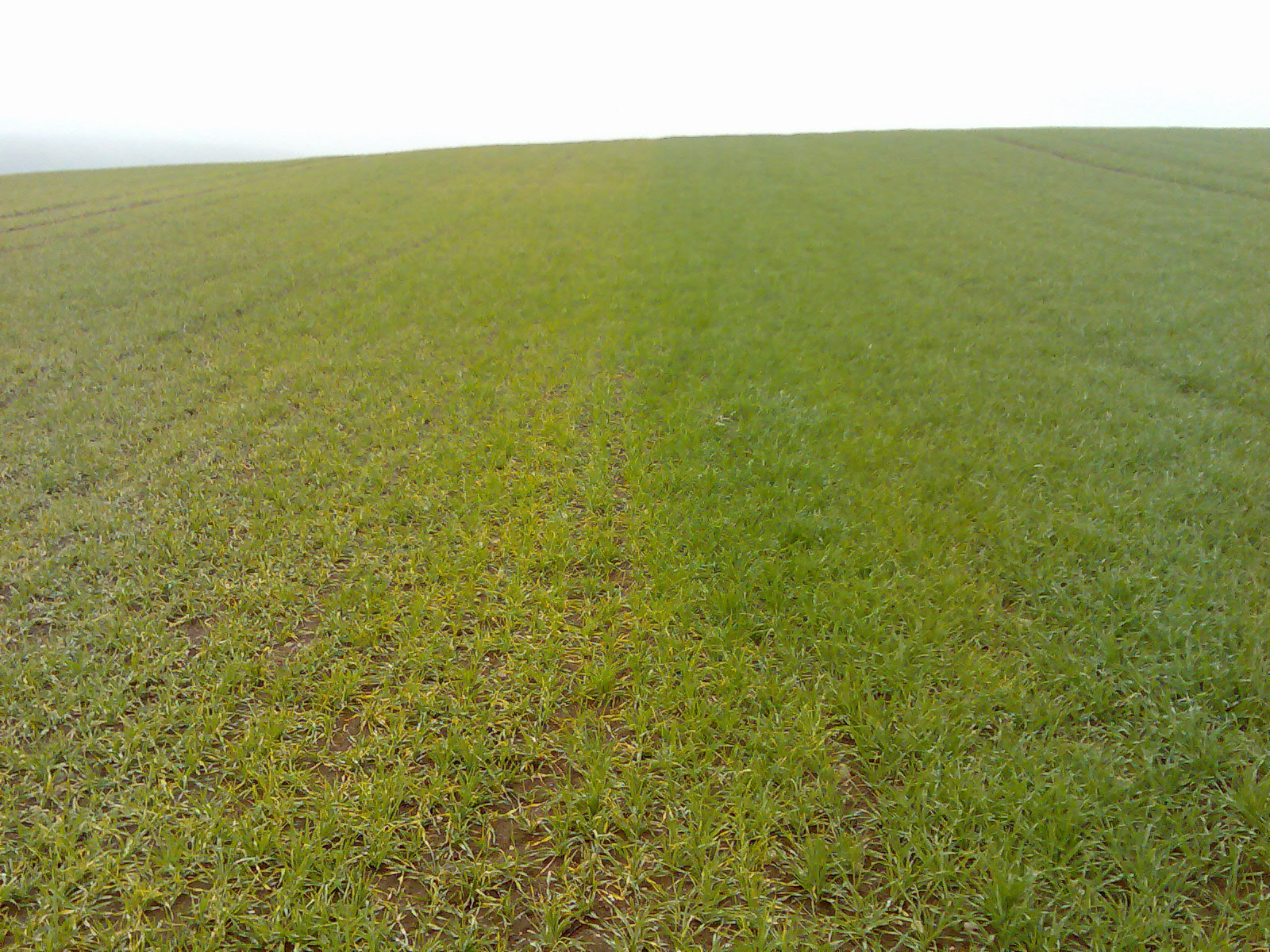
Fig. 1. Field of spring barley in Zihelsky Statek, a.s. farm (Czech Republic, 2010): 1 — Control, 2 — treatment with Albit. Yield increase was 37,1% (Control 35 c/ha, Albit treatment 48 c/ha).
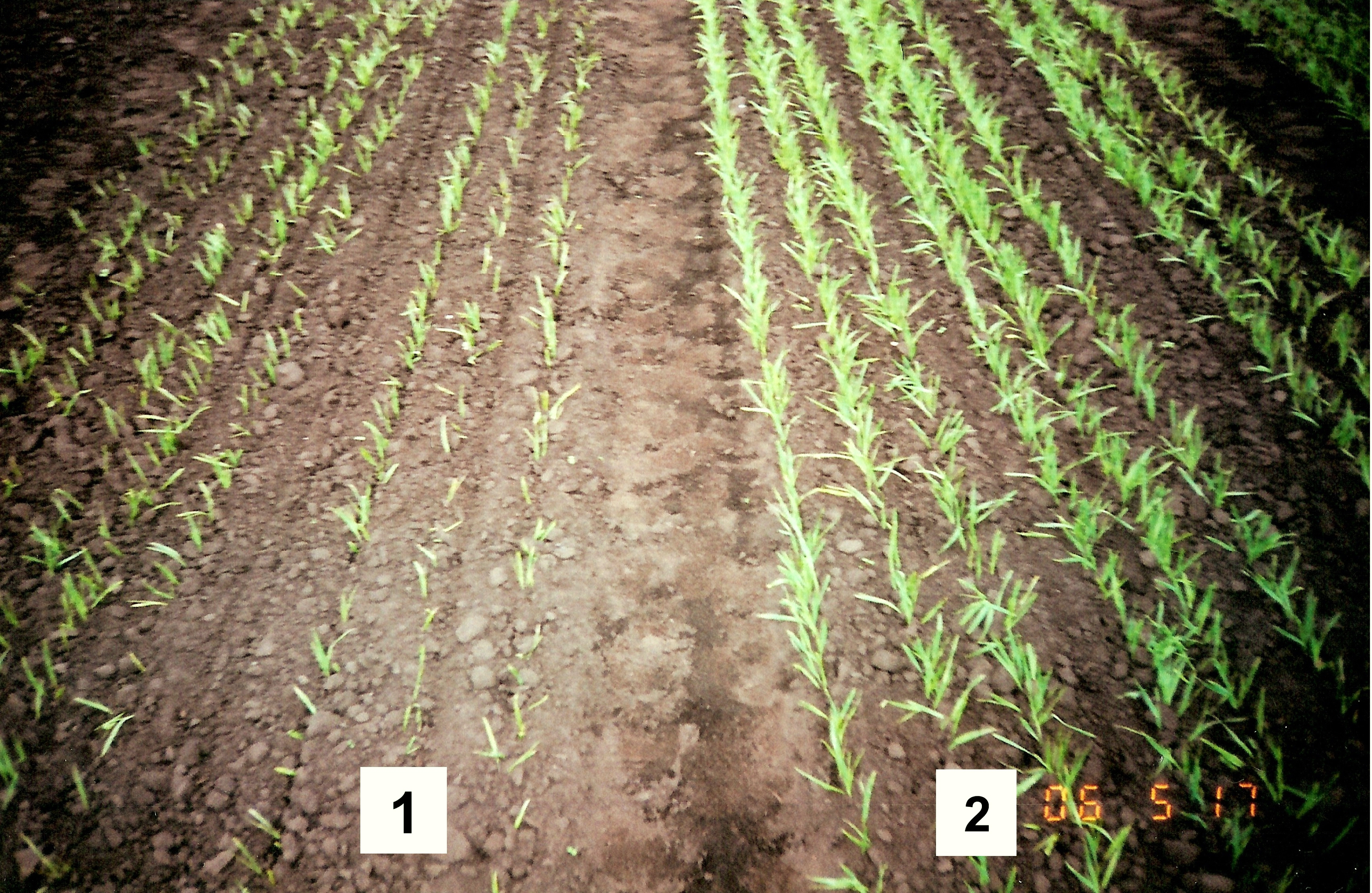
Fig. 2. Growth of spring barley var. Vizit. Before sowing, seeds of spring barley were pre-treated with fungicide protectant (1) and fungicide protectant + Albit (2) (All-Russia Research Institute of Legumes and Groat Crops, 2006)
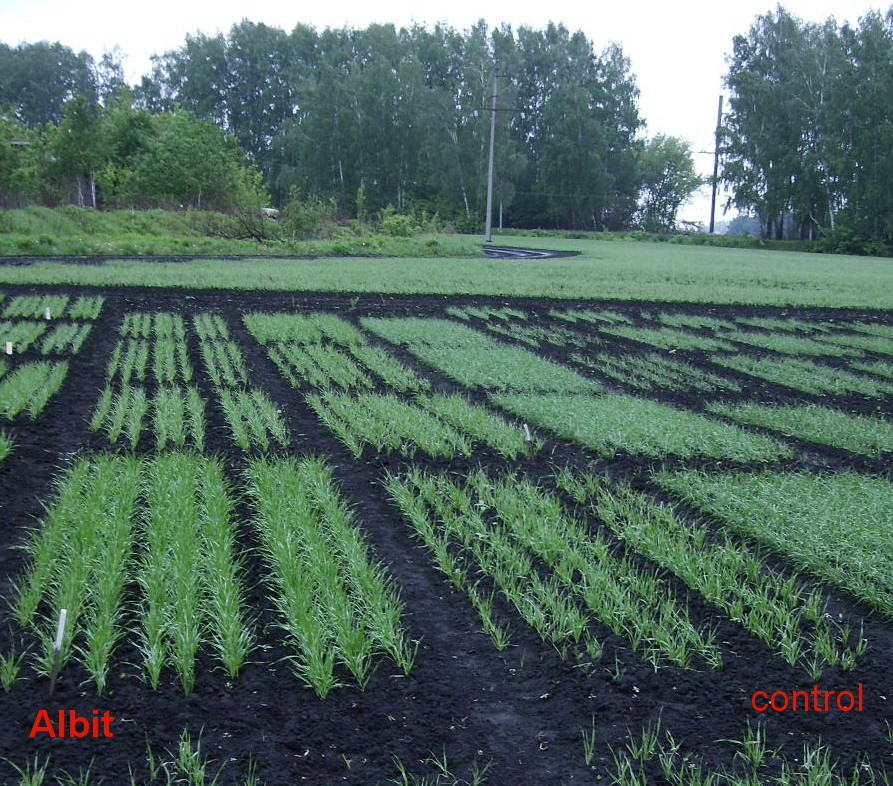
Fig. 3. Influence of Albit on growth of spring barley (All-Russia Research Institute of Legumes and Groat Crops, 2006 г.)
Application of Albit on brewer's barley often raises a question about possible influence of this bioformulation on protein content in yield (analogously to wheat). For brewing barley 1st foliar spraying is applied. Till now, there were no cases of protein content excess over critical brewing threshold of 10%. Obviously, different reaction of barley and wheat to Albit treatment (regarding to protein content) depends on genetically determined features of these cultures. In farms of Voronezh, Lipetsk and Bryansk oblasts Albit has been already effectively used for foliar spraying of beer barley for several years. You can always get necessary information about results and peculiarities of Albit application from dealers in listed regions.
In field trial performed by Jogeva Plant Breeding Institute, Estonia (2010), Albit decreased the severity of scald and net blotch by 37–100% (biological efficacy). Biological efficacy of the treatment with standard chemical fungicide (propiconazole + prochloraz) was at the same level as of Albit (BE 31–100%).
In the conducted field trials on barley economical or biological effectiveness of Albit was not inferior to that of formulations based on difenoconazole, cyproconazole, Pseudomonas aureofaciens and its metabolites, diniconazole, propiconazole, tebuconazole, living Pseudomonas fluorescence, and triterpene acids.
In the following Table, you can see all reports on performance of Albit on spring barley, available in English. For all available reports, please see corresponding table on Russian webpage.
№ |
Year |
Country |
Region |
Institute / Farm |
Report |
| 1 | 2015 |
Latvia |
Priekuli |
State Institute of Breeding of Field Crops |
 |
| 2 | 2015 |
Latvia |
Priekuli |
State Institute of Breeding of Field Crops |
|
| 3 | 2014 |
Slovakia |
Nitra |
Slovak University of Agriculture in Nitra |
|
| 4 | 2013-2014 |
Czech Republic |
Prague |
Research Institute of Plant Cultivation |
|
| 5 | 2012 |
Czech Republic |
Olomouc region |
Ditana spol s.r.o. |
|
| 6 | 2012 |
Czech Republic |
Zlin region |
Agricultural Research Institute Kromeriz |
|
| 7 | 2011-2012 |
Latvia |
Stende |
Stende Institute of Field Crops Breeding |
|
| 8 | 2011 |
Finland |
Inkoo |
Vastankvarn Experimental Farm |
|
| 9 | 2010 |
Czech Republic |
|
Zihelsky statek |
|
| 10 | 2010 |
Estonia |
Jogeva |
Jogeva Plant Breeding Institute |
|
| 11 | 2010 |
Finland |
Inkoo |
Vastankvarn Experimental Farm |
|
| 12 | 2006 |
Russia |
Voronezh region |
All-Russia Institute of Plant Protection / Experimental Production Farm VNIISS |
|
| NOTICE: | Information contained on this page is provided according
to the Terms and Conditions located at
www.albit.com/application/disclaimer.php
|