 |
An innovative plant growth promoter for organic and traditional farming
|
 
|
Grapevine |
|


Materials used in this chapter were published in the book: Biostimulant Albit for increasing yields and protection of agricultures against diseases, A.K. Zlotnikov, Ed. Prof. А. Melkumova. All-Russia Institute of Plant Protection, Russia, 2006.
 The
important role of Albit in grape cultivation has been established by many years
of farmers' experience and field trials. Albit increases fruit set; resistance
to unfavorable environmental conditions and disease damage; activates the recovery
of weakened and damaged plants; improves the compactness of a cluster and increases
the weight and number of ripe berries in a cluster; increases yield; improves
the quality of the produce. Albit is also used as an antidote (safener)
to reduce the phytotoxic effect of pesticides.
The
important role of Albit in grape cultivation has been established by many years
of farmers' experience and field trials. Albit increases fruit set; resistance
to unfavorable environmental conditions and disease damage; activates the recovery
of weakened and damaged plants; improves the compactness of a cluster and increases
the weight and number of ripe berries in a cluster; increases yield; improves
the quality of the produce. Albit is also used as an antidote (safener)
to reduce the phytotoxic effect of pesticides.
The efficiency of Albit was tested during the experiments conducted in 2002-2004 in the North Caucasus region on grape varieties Agat Donskoi, Denisovsky, Riton, Riesling, Chardonnay, Muscat Hamburg. The experiments were carried out by the All-Russian Research Institute of Viticulture and Winemaking (Novocherkassk) and by the North Caucasian Zonal Research Institute of Horticulture and Viticulture (Krasnodar) in the farms of Rostov Oblast and Krasnodar Krai, respectively. Field trials of Albit took place in Ukraine as well, at the National Scientific Center “Tairov's Institute of Viticulture and Wine production” and farm “Tairovskoe” on Cabernet Sauvignon, Odesskii rannii, Odesskii chernii varieties, gaining highly positive results.
Since 2012, Albit has been tested in field experiments in the Czech Republic (Institute of Agricultural Research Kromeriz, Zlin Region, variety Neuburske), the Republic of Dagestan (Dagestan Research Institute of Viticulture and Grape Processing Products, Mamedkala, varieties Rkaciteli, Premier), in Crimea (National Institute of Grapevine and Wine, Magarach, Yalta, Fig. 1) on table varieties Moldova, Asma, Muscat Italia, Amber Muscat, Chocolate and wine varieties Cabernet Sauvignon, Syrah, Merlot).
 |
 |
Fig. 1. Grapes treated with Albit: All-Russian Research Institute of Viticulture and Winemaking “Magarach,” Yalta, Crimea, 2015 (left); Manisa, Turkey, 2016 (right).
In the experiments outlined above, Albit demonstrated a stimulating and protective effect on grape crops and contributed to the restoration of the vines damaged by frost and drought.
Stimulation of plant growth shows in all parts of the plant: stems, leaves, and bunches. Albit increases the annual shoot growth by 28-64%, the growth of vine per shoot by 28-56%, and growth per mature shoot by 59-64%. Albit increases the percentage of berry ripening by 3.7-13.6% and cluster health status and weight by 21-24%. As an example, below are the results of trials in Krasnodar Krai (Table 1).
Table 1. Influence of Albit on fruit set and cluster compactness (tests of North-Caucasian Institute of Horticulture and Viticulture in Temryuk region of Krasnodar Krai, 2004)
| Treatment version | var. Riesling (Yubileynoye vinery) | var. Chardonnay ( Golubaya vinery) | ||
cluster fullness, |
cluster weight, |
cluster fullness, |
cluster weight, |
|
| Control | 3 | 100 | 3.5 | 100 |
| Albit 250 ml/ha | 4.2 | 124 | 4.4 | 121 |
| Albit 250 ml/ha + 1/2 rate of a chemical fungicide | 4.6 | 132 | 4.8 | 135 |
| Standard chemical fungicides | 4.1 | 128 | 4.4 | 125 |
| LSD05 |  |
2.0 | |
2.5 |
Field trial data from the Vinarstvi Bukovsky farm (Kobyli region, Moravia, Czech Republic) distinctly illustrate the growth-stimulating effect of Albit. In the spring of 2014, 70% of this farm's vineyards were destroyed by hail (data provided by an insurance company's assessment). The timely application of Albit allowed to reduce the percentage of damage from 70% to 20%. In the Kobyli region, hail annually causes excessive damage to vineyards. In the previous years, when Albit was not used, the after-hail damage was more prominent and did not recede.
Frost damage is as substantial problem to grapevines due to the high sensitivity of grapes to freezing temperatures. Since 2014, the Research Institute of Viticulture and Winemaking “Magarach” (Yalta, Crimea) conducted multiple studies to assess the effect of Albit on the overwintering grapevine. The experiments surveyed the table grape varieties: Muscat Italia, Muscat Amber, Moldova, Chocolate, and wine varieties: Merlot, Syrah, and Cabernet Sauvignon. The studies assessed multiple indicators of cold hardiness of vine: fruiting rate, content and intensity of starch hydrolysis in shoots, shoot differentiation. Results showed that Albit treatment promoted a better tissue differentiation (by 6.2-10.7% compared to control). Albit treatment groups also demonstrated an increase in the dry matter content and starch accumulation in shoots (by 16.6–26.6% to the control). These results point to a possible increase in the cold hardiness of the grapevine. With Albit, the actual (factual) cold hardiness, defined as the crop's ability to endure frosts without damage, increased by 22.4–27.9% (Table 2). For all tested grape varieties, the application of Albit allowed to shift the limit of the critical low temperature towards lower values by about 2°C (Fig. 2). The grapevine's ability to recover from frost also increased with Albit by an average of 28.7%.
Table 2. Effect of Albit on the cold hardiness of grapevine (All-Russian Research Institute of Viticulture and Winemaking, “Magarach,” 2014-2018)
Albit increases grapevine frost tolerance: |
POTENTIAL |
|
ACTUAL |
|
|

Fig. 2. The effect of Albit treatment on the cold hardiness of grapes (table varieties Muscat, Moldova, Chocolate and wine varieties Merlot, Syrah, Cabernet Sauvignon) under simulated critical negative temperatures (“Magarach,” 2016-2018)
Conversely to cold hardiness, Albit helps Turkey's winemaker successfully target drought (another major stress that grapevine crops are often subjected to). In the conditions of the severe drought of 2016 in the vineyards of Manisa (Denizli region), grape clusters in the control plots dried up. Plants quickly recovered after the application of Albit (2 sprays of 250 ml/ha), and the berries continued to ripen. With Albit, the increase in yield was 32.5%.
 |
 |
Fig. 3. Albit treatments on grapevine in drought conditions in Manisa, Turkey, 2016: without Albit (left), with Albit (right)
Albit demonstrates its protective quality by immunizing plants against powdery mildew (oidium) (average BE 70.0%) and mildew ('downy mildew') (average BE 50.5%). Albit is effective against oidium (mild development of oidium). Fungicidal activity of Albit shows at a disease spread of 9-100% and disease development of 1-90%. In the experiments, Albit suppressed the development of grape diseases on leaves, shoots, and grape clusters.
Field trials of the North-Caucasian Institute of Horticulture and Viticulture also showed high efficiency of Albit against Phomopsis cane and leaf spot (average BE 79.2%). The increase in the shoot growth observed in the Albit treatment groups occurred largely due to the fungicidal activity of Albit against the leaf spot, since the pathogenic agent of the disease (Phomopsis viticola Sacc.) causes the thinning of vines and death of buds.
As a result of the stimulating and protective effect of Albit, trials show an increase in yield (Figs. 4, 5). The trials' results demonstrate that Albit increases the yield of grapes by 23.1% (1.93 t/ha yield increase). In 2014-2017 Crimea trials on table grapes, Albit treatment increased the yield of drip-irrigated crops by 11-15,5%, and dryland-farmed crops by 22-120%. In 2004-2005, in the Krasnodar Krai (Russia), the yield of table grapes treated with Albit increased by 7-98%. In 2015-2017, in Turkey, the yield increased by 32-33% (+10-12.2 tonnes per hectare) with Albit. In 2021, in Portugal (Almeirim), a record harvest of 58 tonnes per hectare was obtained, which is almost 50% higher than the average yield in the district.

Fig. 4. Effect of Albit on grapevine var. Cabernet Sauvignon (dryland-farming conditions, Research Institute of Viticulture and Winemaking, “Magarach,” Crimea, 2016)

Fig. 5. When using Albit (4 x 250 ml), a record yield of Fernão pires grapes was obtained: 58 tonnes per hectare (Almeirim, Santarém district, Portugal, 2021)
The results that show the effectiveness of Albit treatments in vineyards of different regions are presented in Table 3 below.
Table 3. Results of Albit application in vineyards in different regions
Country, year |
Variety |
Yield increase after Albit application, % |
Biological efficiency of Albit |
Russia |
Agat Donskoi, Denisovsky |
n/d * |
43-59% |
Russia |
Agat Donskoi, Denisovsky, Riton |
n/d |
1-86% |
Russia |
Riesling, Chardonnay |
21-24% |
38-100% |
Russia |
Pino Blanc, |
7-98% |
23% |
Russia (Crimea), 2014 |
Asma, Moldova, Cabernet Sauvignon |
11-64% |
n/a |
Russia (Crimea), 2015 |
Asma, Moldova, Cabernet Sauvignon |
10-16% |
n/a |
Russia (Crimea), 2016 |
Muscat Italia, Moldova, Cabernet Sauvignon |
7-120% |
n/a |
Russia (Crimea), 2017 |
Amber Muscat, Chocolate, Merlot, Syrah |
11.4-74.8% |
n/a |
Russia (Dagestan), 2014 |
Prem'er, Rkaciteli |
30-36% |
4-18% |
Ukraine |
Cabernet Sauvignon, Odesskij early |
22-31% |
n/a |
Czech Republic, 2012 |
Neuburske |
22-66% |
53-94% |
Czech Republic, 2014 |
Chardonnay klon, Muskat moravsky, |
167% (after hail damage) |
|
Austria, 2013 |
Blaufrankisch, Zweigelt |
the same with Albit and chemical fungicides |
the same with Albit and chemical fungicides |
Switzerland, 2014 |
Ugni-blanc |
n/a |
97% (Albit + fungicide) |
Hungary, 2015 |
Pinot noir |
17% |
n/a |
Turkey (Denizli region), 2016 |
Sultaniye |
32.5% |
n/a |
Turkey (Denizli region), 2017 |
Sultaniye |
33.3% |
n/a |
Note: *n/a – not applicable (the variable was not tested)
Application: We recommend spraying Albit solution in vineyards (approx. 3 g/10 L). The recommended application rate of Albit is 260-325 g/ha (200-250 ml/ha); use of the working solution: 1000 l/ha, 10 L per 100 m2. Spraying should be conducted before and after flowering, at the beginning of berry formation, at the cluster formation stage, and at the berry maturation stage (when berries start to color). Usually, three treatments are done per growing season; however, the number of sprays can be increased to five if necessary. The frequency of treatments is determined by the time of Albit's protective action against grape diseases, which is about 15 days. Early treatments are the most effective.
Application of Albit should be incorporated into the standard grapevine protection system used in vineries. Albit is used in tank mixes with chemical insecticides and fungicides during the scheduled treatments against diseases and pests.
Albit treatments allow to reduce the amount of chemical fungicides used on crops (depending on the rate of disease development). Using lower rates of fungicides is cost-efficient and produce an environmentally friendly and organic harvest.
Albit's performance on downy mildew and powdery mildew (oidium) determines the extent to which Albit can replace chemical fungicides. These two diseases of fungal origin are the primary threat to the grapevine. Experiments show that the effectiveness of Albit against powdery mildew is close to that of the standard chemical plant protection products. All Albit trials in Krasnodar Krai and Rostov Oblast noted this quality. Fungicidal activity of Albit at the level of chemical product standards displays both at low and high levels of disease development (development up to 90%, spread up to 100%). Thus, Albit can completely replace chemical fungicides against powdery mildew.
The effectiveness of Albit against downy mildew is lower than against powdery mildew (about 50% BE). The protective effect of the product against downy mildew decreases with increasing disease development (Fig. 6). The logarithmic figure below summarizes the experiments that studied the biological activity of Albit and chemical fungicides against this disease.
Albit has a perceptible fungicidal effect against downy mildew at the level of chemical standard products only when disease development is below 5%. With a higher disease development, Albit should be used together with chemical fungicides. This combination will still significantly reduce the amount of fungicide. Our field trials show that, when targeting downy mildew, Albit combined with 1/2 rate of chemical fungicide has the same protective effect as a full rate of fungicides. In most cases, mixed treatments with Albit are 5-10% more efficient (Fig. 6).
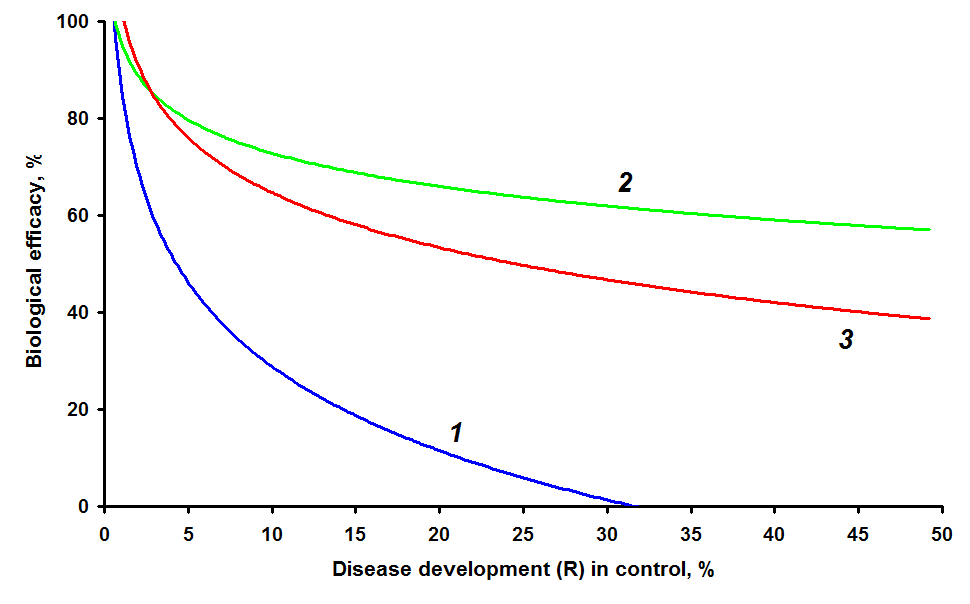
Fig. 6. The effect of fungicidal treatments against various degrees of development of grape's downy mildew. 1) Albit; 2) Albit + 1/2 fungicide; 3) full-rate fungicide (pooled data of trials at the Research Institute of Viticulture and Winemaking and North-Caucasian Institute of Horticulture and Viticulture)
For example, the field trial of the North-Caucasian Institute of Horticulture and Viticulture ('Yubileynoye' farm) that explored disease protection of grapevine var. Riesling used the following method:
- 06/12/04: Product based on mancozeb + metalaxyl 2.5 kg/ha;
- 07/05/04: product based on mancozeb + metalaxyl 2.5 kg/ha + product based on spiroxamine + tebuconazole + triadimenol 0.4 l/ha;
- 07/28/04: product based on mancozeb + metalaxyl 2.5 kg/ha + product based on sulfur 8 kg/ha.
These products were applied at a 1/2 rate when used with Albit in a tank mix. The effectiveness of the chemical fungicide against downy mildew was 92%, and that of Albit combined with 1/2 rate of fungicide was 99%.
Other experiments effectively used other fungicides: based on mancozeb + dimethomorph, dimethoate, mancozeb + mefenoxam, spiroxamine + tebuconazole + triadimenol, copper oxychloride, sulfur, flutriafol, triadimefon, Bordeaux liquid, and others. Experiments of the Research Institute of Viticulture and Winemaking in the Rostov Oblast used Albit together with the 1/2 rates of fungicides. They successfully restrained the active development of downy mildew and powdery mildew for up to 1.5 months. Products used in the experiment were based on copper oxychloride, dimethoate, flutriafol, mancozeb + dimethomorph, sulfur, and dithianon (2003).
The increasing use of new-generation pesticides aggravates the problem of pathogen resistance. In this regard, the ability of Albit to replace chemical fungicides (partially or entirely) becomes particularly important since plants develop almost no resistance to immunizers (growth regulators).
Combining Albit with fungicides significantly stimulates the development of grape clusters compared to either Albit on its own or chemical products. In the experiments of the North-Caucasian Institute of Horticulture and Viticulture, Albit+fungicides treatment groups showed a 32% increase in the mean weight of a cluster of var. Riesling (compared to the control), as opposed to a 28% increase in fungicidal treatment groups. In the experiments of the same year on var. Chardonnay at 'Golubaya Bukhta' farm, the increase in cluster weight was 25 and 35%, respectively. The bunch compactness was 4.4 points with the standard chemical product and 4.8 with the combination of the product with Albit (Table 1). The experiments of the Research Institute of Viticulture and Winemaking combined Albit with a triadimefon-based product (0.1 kg/ha), which increased the percentage of berry ripening by 7-21%, as compared to the chemical product on its own (0.2 kg/ha). Tests were conducted on the Denisovsky and Agat Donskoi grape varieties. In the triadimefon-based product group, the average annual growth per shoot was 334 cm, and in the product+Albit group, it was 424 cm.
The field trials of North-Caucasian Institute of Horticulture and Viticulture used Albit with 1/2 rates of fungicides. As a result, the development of grape diseases was restricted by 84-100%, and treatments' costs were reduced.
All professional winegrowers know how difficult it can be to achieve the full potential of the flavor in a new grape variety when it is introduced to new soil and climatic conditions.
Albit can solve this problem. For example, in the Transcarpathian region of Ukraine, at the vineyards of the well-known farms CHIZAY and ISBERG, the use of Albit increased the survival rate of propagules, the completeness of the cluster, strengthened the vine, ensured a high-quality harvest (the best in the region) while allowing to reduce the rate of fungicide use. However, agronomists were most impressed with the aroma of grape clusters: variety-specific aromas highly intensified. Later, it was noticed that the strengthened aromas had transferred to the wines made from these grapes. In 2011, at 'Magarach,' it was also noted that an old Crimean table variety Asma, which in recent decades has lost some of its taste and biochemical qualities, managed to restore its signature aroma when grapevines were treated with Albit. Albit also increased the overall scores of flavor and aroma and contributed to an even color of berries (Fig. 7). It is possible that when the fungicides were used in full rates, the pesticidal stress inflicted on crops interfered with the synthesis of aromatic metabolites in ripening berries; Albit removed the stress, hence promoting healthy developing of the full bouquet of aroma and protecting the crops against diseases.


Fig. 7. Albit treatment improved quality, variety-specific aroma, and yield of grape var. Asma ('Magarach,' Crimea, 2014). Left: control, right: Albit treatment (with evenly colored berries)
Based on the experimental data of the grape crops (variety Moldova, Asma, Cabernet Sauvignon) grown in the South Coastal zone of Crimea (Magarach, 2014), it can be concluded that:
- Biostimulant Albit has a robust anti-stress and growth-stimulating effect, which allows not only to maintain high yield, but also to significantly increase the productivity of table and wine grape varieties (compared to the control with standard plant protection products) even in the extremely arid weather conditions of 2014. The positive effect of Albit was actively demonstrated both in the full-rate fungicide groups and in decreased rate fungicide groups; both in table and wine varieties; both in drip irrigation systems and on dry land.
- With Albit, yield increased by 10.9% in the drip irrigation system and 26.5–63.8% on dry land, compared to control. A significant increase was observed in the size and weight of 100 berries: 9.9–101.1% to control, and 7.0–86.6% in the cluster weight.
- Albit had a positive effect on several markers of crop quality. In the wine grape variety Cabernet Sauvignon, the mass concentration of sugar exceeded the control values by 13.5% during the harvesting period; the titratable acidity was 6.7% lower than control. In table grape varieties (Moldova, Asma), the score in cluster and berries' physical characteristics increased by 18.7-46.1% compared to control, and scores of taste and aroma increased by 9.5-16.2%. A uniform color of berries was noted. A 31–90% decrease in the residual pesticides' content in the yield was noted in Albit groups on all tested varieties.
- Incorporating Albit into the grape treatment system influenced the synthesis of phenolic compounds and aromatics. Albit groups had a mean 24.4% increase in the content of anthocyanin pigments in grapes of all varieties; a 5.9% increase in flavonols was noted, as well as a 32.8% increase in stilbenes. The total amount of flavanols increased only on drip irrigation. The increase was recorded mainly in the groups with a reduced rate of chemical fungicides. Since Albit has an immunizing effect against diseases, it is recommended to use Albit with a 20–25% reduced rate of fungicides.
- Albit improved the storage qualities of grapes by 31.7–100%. Improved storage ability contributed to a decrease in the losses of cluster weight by 28.1–52.8% while maintaining the high-quality taste and aroma of berries. In addition, Albit treatment increased the proportion of bound water and decreased the free fraction water in berries, which added to a higher flavor score by the 'skin properties and berry pulp' parameter. This quality of Albit leads to an improvement in berry storage qualities, as well as it is connected to a fundamental mechanism for increasing drought tolerance.
The identified patterns were confirmed by the studies conducted in 2015, 2016, 2017, and 2018. The results of the experiments in 2016 and 2017 are presented in Tables 4 and 5.
Table 4. Combined results of Albit trials on grapevine demonstrating the yield increase in Albit groups to control without Albit, % (South Coast of Crimea, 2016)
Variety and field trail
Index |
Moldova |
Muscat Italia |
Cabernet Sauvignon |
Average of all trials | |||
table |
table |
wine |
|||||
Trial 1 |
Trial 2 |
Trial 1 |
Trial 2 |
Trial 1 |
Trial 2 |
||
Yield |
29,4 |
22,0 |
120,6 |
46,7 |
24,3 |
6,9 |
41,7 |
Cluster weight |
14,7 |
12,1 |
30,3 |
6,4 |
-1,3 |
-17,7 |
7,4 |
100 berries weight |
0 |
19,5 |
6,0 |
-8,3 |
n/d |
n/d |
4,3 |
Berry index |
25,6 |
21,4 |
20,8 |
16,1 |
n/d |
n/d |
21,0 |
Physical appearance of a cluster (grade) |
12,5 |
18,7 |
4,6 |
9,3 |
n/d |
n/d |
11,3 |
Flavor and aroma of berries (grade) |
18,7 |
6,2 |
4,6 |
6,9 |
n/d |
n/d |
9,1 |
Overall organoleptic assessment (grade) |
8,5 |
12,2 |
12,9 |
4,7 |
n/d |
n/d |
9,6 |
Mass concentration of sugars |
-1,3 |
-2,2 |
8,0 |
9,2 |
-6,0 |
2,5 |
* |
Mass concentration of titratable acid |
7,0 |
7,0 |
-21,8 |
-23,1 |
24,6 |
14,5 |
* |
Mass concentration of phenolic compounds in wine matter |
n/d ** |
n/d |
n/d |
n/d |
-6,4 |
5,3 |
* |
Mass concentration of anthocyanins in wine matter |
n/d |
n/d |
n/d |
n/d |
22,6 |
53,7 |
38,2 |
Total production costs |
-0,8 |
-5,5 |
-0,4 |
-2,6 |
-3,7 |
-10,6 |
-3,9 |
Cost price of grapes |
-24,3 |
-19,3 |
-52,7 |
-37,5 |
-21,1 |
-7,9 |
-27,1 |
Net profit per hectare |
3,9 |
3,1 |
9,9 |
7,1 |
38,0 |
14,4 |
12,7 |
Profitability |
37,2 |
27,8 |
132,4 |
71,3 |
75,0 |
24,3 |
61,3 |
Note:
* – there is no general pattern of the effect of the product
** n/d – no data available (the study did not evaluate this index)
Table 5. Synthesized results of using Biostimulant Albit on grapevine showing an increase in Albit treatment groups to control without Albit, % (South Coast of Crimea, 2017)
Index |
Grape variety |
Average of all trials |
|||
Chocolate |
Muscat Amber |
Syrah |
Merlot |
||
table |
wine |
||||
Yield |
36,5 |
74,8 |
11,4 |
13,8 |
34,1 |
Cluster weight |
29,9 |
71,6 |
18,8 |
21,5 |
35,5 |
Number of clusters per crop |
4,1 |
3,4 |
7,6 |
-7,9 |
1,8* |
Standard product output |
2,9 |
15,3 |
n/d |
n/d |
9,1 |
Physical appearance of a cluster (grade) |
11,1 |
6,2 |
n/d |
n/d |
8,7 |
Flavor and aroma of berries (grade) |
2,4 |
7,7 |
n/d |
n/d |
5,1 |
Overall organoleptic assessment (grade) |
3,4 |
12,0 |
n/d |
n/d |
7,7 |
Mass concentration of sugars |
11,5 |
27,2 |
0,5 |
2,5 |
10,4 |
Mass concentration of titratable acids |
10,8 |
-45,9 |
10,2 |
-25,6 |
-12,6* |
Technical reserve of phenolic compounds |
n/d |
n/d |
-2,8 |
-5,4 |
-4,1 |
Technical reserve of anthocyanins |
n/d |
n/d |
-1,1 |
-3,4 |
-2,3 |
Total production costs |
-4,6 |
-6,7 |
-6,5 |
-6,5 |
-6,1 |
Cost price of grapes |
-30,1 |
-46,6 |
-16,1 |
-17,9 |
-27,7 |
Net profit per hectare |
44,7 |
313,6 |
32,5 |
50,8 |
110,4** |
Profitability |
51,7 |
349,1 |
41,8 |
63,7 |
126,6 |
Note:
n/d – no data available (the study did not evaluate this index)
* – there is no general pattern in the effect of the product
** – high economic efficiency was due to the partial application of Albit as
a substitute for fungicidal treatments in 2017 trials
Studies of Research Institute of Viticulture and Winemaking (Novocherkassk) showed the high efficiency of Albit for getting hybrid seeds and seedlings in the selection process for grapes, as well as for obtaining grape saplings. This institute has developed and patented a method for grafting and growing grafted seedlings using Albit (Malykh, Titova, 2015). The method includes combining a rootstock with a scion, waxing grafts, stratification on glauconite, planting, and fertilizing the plants. Albit is used at the stratification stage as an additive to the nutrient medium (in a concentration of 0.4%) and for fertilizing already planted seedlings (Albit solution 0.2%) twice a month during the growing period (6 times in total).
Using Albit to activate the inosculation allows to avoid the application of fungicides during the stratification period. Albit ensures the safe growth of seedlings, which show resistance to pathogenic organisms and diseases; the costs of the production is reduced. Albit intensifies the physiological and biochemical processes in seedlings, which increases the survival rate of grafts and accelerates their growth and development: the survival rate of stalks increases by 10-70%; growth potential, leafiness are increased as well, together with the mean shoot length (up to 90% above control), the mean mature plant shoot length (up to 2 times more than control), leaf surface area (up to 80% above control). Safe growth of grafted seedlings out of the pot increases by 26-110%. The nutrient analysis shows an increased content of trace elements in the shoots, leaves, and roots. At the same time, the growth of shoots during the growing season is enhanced both in the apical and in the lateral meristem. The maturation rate and quality of the seedlings improve as well.
Albit can be successfully used on grapes at private backyard plots. The multipurpose qualities of Albit allow to protect home vine yards against major plant diseases and increase the vine growth and yield without using harmful chemical products. Albit's rate of use is just 3 ml/100 m2.
Innovative horticulturist V.E. Tochilin from Novopolotsk (Belarus) uses Albit to effectively protect his northernmost vineyard against diseases, develop frost tolerance in grapes, and receive impressively high yields of environmentally-friendly produce (dozens of grape varieties).
An essential characteristic of Albit is that it is environmentally friendly. Albit is one of the few products on the plant disease protection market that can be safely used on grapes. Sanitary-hygienic classification assigns Albit the class IV of toxicity (practically non-toxic). Albit is allowed for use in organic farming in the EU countries. Albit can help reduce the rate of fungicides with higher toxicity levels, i.e., I-III classes. Some fungicides (copper-containing) are toxic to animals and humans and often cause burns to grape crops instead of protecting the plants.
Residuals of chemical pesticides that are currently used in grape protection can remain in crops and, when the product is consumed, cause allergies, poisoning, and systemic dysfunction. According to the studies of the 'Magarach' Research Institute, using Albit on grapes promotes a decrease in the residual amount of pesticides in yield (31-90%). It is crucial to reduce the use of chemical-based products in vineyards (especially when growing table grapes) to maintain the environmental safety and high nutritional quality of the produce.
| NOTICE: | Information contained on this page is provided according
to the Terms and Conditions located at
www.albit.com/application/disclaimer.php
|